


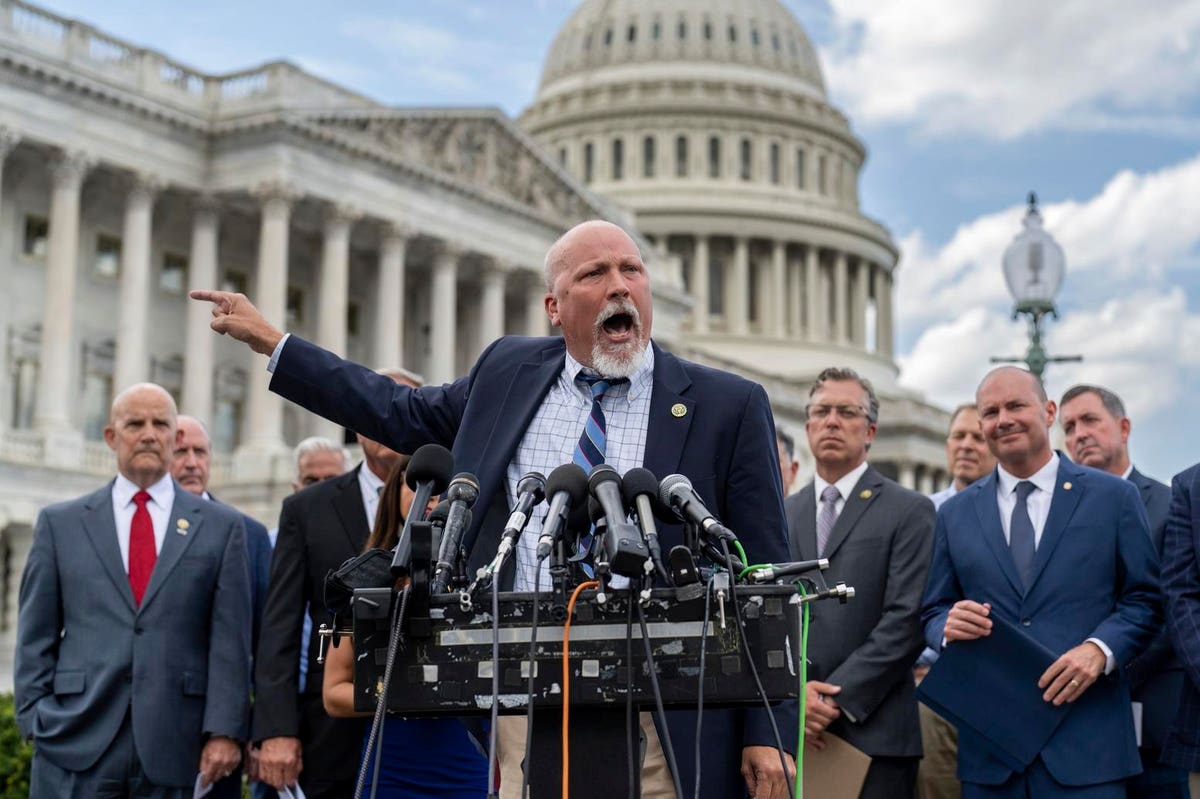
Congress is in chaos with just 10 days remaining to avert a partial government shutdown. Over the weekend, negotiators for the center-right Mainstreet Caucus and far-right Freedom Caucus agreed on a bill that would continue government funding at reduced spending levels after the fiscal year ends on September 30th. But nearly a dozen Freedom Caucus members are still refusing to support the deal, denying House Republicans the majority they need to pass their bill.
Counterintuitively, this failure of House Republicans to coalesce around a government funding plan may actually reduce the odds of a government shutdown at the end of the month if it persists. One need only look at previous government shutdowns to understand why this is the case.
Government agencies shut down when the House, Senate, and president cannot agree on a new funding bill before previously enacted funding legislation expires. Heading into every government shutdown for the past three decades, the House of Representatives has always passed at least one piece of legislation that would keep the government open if also agreed to by the president and the Senate. This approach gives House leaders a pretext to argue that a shutdown occurred because the Senate and/or president refused to compromise, even if the real problem is the (usually Republican) House majority demanding controversial policy riders or aggregate spending levels considered unacceptable by one or both of the other parties.
A repeat of that scenario has been building for several months now. The bipartisan debt limit agreement reached between House Speaker Kevin McCarthy and President Joe Biden in June set binding spending targets for the next two years. Since then, the Senate Appropriations Committee has passed all 12 appropriations bills for the next fiscal year at levels largely consistent with that agreement, with broad bipartisan support. But the Freedom Caucus pressured McCarthy to renege on the agreement, and he gave into their extreme demands. As a result, the House Appropriations Committee passed partisan appropriations bills that would cut spending significantly below the levels McCarthy agreed to less than four months ago. Yet House GOP leaders have been unable to rally the 218 votes needed for their fractious conference to pass either these bills or a temporary stopgap through the full House.
If the Senate passes a bipartisan stopgap spending bill that President Biden agrees to sign, while the House fails to pass any spending bill of any kind before midnight on September 30th, there will be no argument that anything other than GOP dysfunction is to blame for the shutdown. That outcome could jeopardize the 18 House Republicans who represent districts carried by President Biden in 2020 and cement Democrats as the favorites to take back the House majority next year.
The House Republican holdouts claim that their goal is to extract additional spending cuts, not to shut down the government. But funding the government at reduced levels still requires passing a spending bill. President Biden, Senate Democrats, Senate Republicans, and House Democrats are united in wanting to pass a continuing resolution that bridges the gap until they can pass full-year appropriations consistent with the June debt-limit agreement. House Republicans cannot rationally reject their approach without proposing an alternative.
By refusing to rally around a bill that can get the support of 218 House Republicans, the Freedom Caucus holdouts are paradoxically leaving McCarthy with little choice but to put whatever bipartisan bill passes the Senate on the floor and let members vote their conscience. And in this scenario, a coalition of House Democrats and centrist Republicans will almost certainly carry the day and avoid a shutdown (at least for the time being).
There is still a chance that enough far-right holdouts will reach the same conclusion and come around to supporting something similar to the bill negotiated by Republican leaders last weekend to preserve their negotiating position. But if they don’t, the House GOP’s inability to unite around a coherent plan to prevent a government shutdown may paradoxically be the very thing that prevents the government from shutting down.
Read the full article here