


Economic policy chaos reigns high. This massive jump in uncertainty over tariffs, federal layoffs, the cuts to already appropriated federal funds, potentially soaring deficits and the future path of interest rates, among others, is already taking a toll on the economy. Consumers and businesses are changing their spending habits, contributing to a noticeable slowdown in the economy.
It all starts with economic policy uncertainty, created by President Donald Trump and his administration. Most of this policy uncertainty pertains to tariffs. Consumers and businesses are worried about rising inflation, fewer jobs and less economic growth. Consumers and businesses can theoretically respond in different ways, but all of their reactions will ultimately result in less economic activity.
It is no surprise that economic policy uncertainty has dominated people’s minds. The Economic Policy Uncertainty index, created by researchers at the University of Chicago, Northwestern University and Stanford University, reached its highest level on record, dating back to 1985, in April 2025. Uncertainty has grown by 377.1 percent from its recent low point in October 2024 and stood 29.7 percent above its most recent record from May 2020 amid an ongoing once-in-a-century pandemic. Chaotic economic policymaking has been worse in terms of economic uncertainty than a global public health disaster.
Let’s start with consumers to understand the toll that uncertainty could take. Households could spend less to build up savings for future drops in incomes such as cuts in hours, fewer bonus payments, and even layoffs. Alternatively, households could use their current incomes and savings to buy things that could become more expensive in the future. Even if consumers spend more now out of fear of higher inflation, they will still spend less in the future. The longer term result stays the same: households will spend less money.
The most recent data show that households already pulled back in their spending. That is, the first response – less spending and more saving – dominated the second – more spending out of fear of inflation. Household spending on cars and car parts dropped by 11.1% in the first quarter of 2025, the largest decline since the third quarter of 2021, the heyday of supply chain bottlenecks. Households also lowered their spending at restaurants and instead spent more on food at home during that time. On the other hand, some consumers spent more, possibly because out of fear of more inflation. For example, households increased their spending on recreational vehicles by 7.0% in the first three months of this year. In the end, though, larger spending bumps did not halt the slowdown in consumer spending. Total consumption spending grew only by 1.8% in the first quarter, down from 4.0% at the end of 2024.
Businesses could theoretically also initially react to the onslaught of uncertainty in contradictory ways. They could build up inventories, which would boost economic growth, and they could hold off on new, large, longer-term investments such as factories. In the end, though, even a build up of inventories could portend future economic slowdown since businesses spend money in the near term to avoid higher costs (and more spending) in the future.
The most recent data on business spending indicates that businesses seem indeed worried about what the future, thanks to tariffs, will bring. They rapidly built up inventories in the first quarter of 2025. Those investments added 2.3 percentage points to economic growth. Put differently, the economy would have shrunk by 2.6% without the added increases in inventory spending. At the same time, though, business spending on structures such a factories was more or less flat, with investments on manufacturing plants falling by 4.3%. Admittedly, that drop came from rather high levels, but the manufacturing building boom may have come to an end amid the threats of global tariffs.
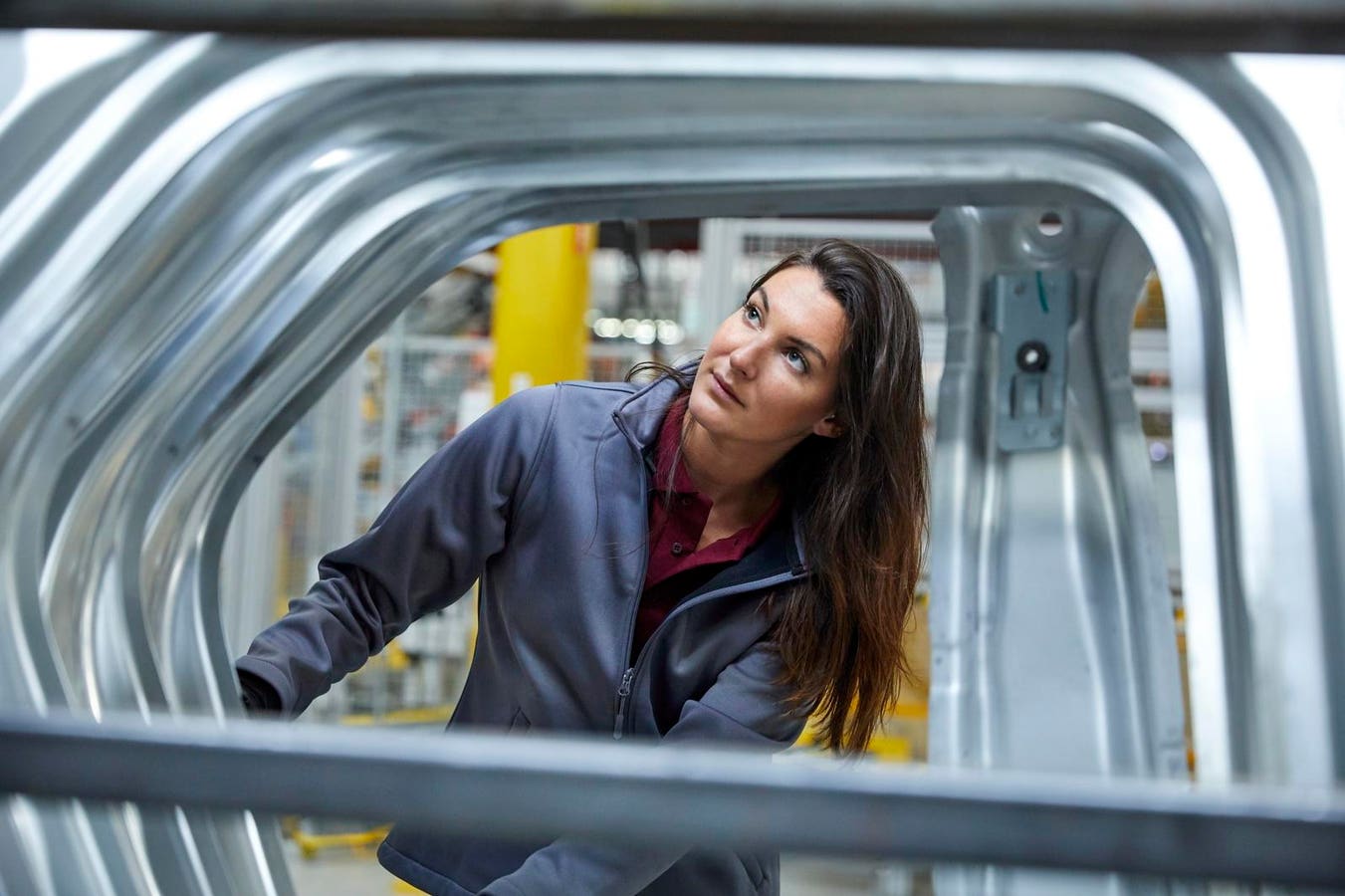
The auto industry is one area where consumers and businesses pulling back seem to come together. Spending on new cars dropped by 6.9% in the first quarter and the aggregate number of hours that workers worked in auto manufacturing dropped by 1.5% in April 2025 alone and was 4.5% percent lower than a year earlier. Car companies appear to have cut back on the number of people they employ and the number of hours that they need people to work for. Less consumer spending seems to have already reduced working hours in car manufacturing. In the end, the massive uncertainty may be taking a toll on people’s livelihoods before the tariffs, federal layoffs and spending cuts are fully in effect.
Heightened economic policy uncertainty undoubtedly hurts the economy. The uncertainty of what may happen alone is enough to slow economic activity. Things do not actually have to happen for consumers and businesses to worry about the future and pull back on their spending, slowing economic activity. When the bad things that people feared will eventually happen, things will likely get worse. Instability and uncertainty are sometimes unavoidable, as in the case of a pandemic, but this time around, all of the uncertainty is deliberate and all of the economic pain is self-inflicted.
Read the full article here