



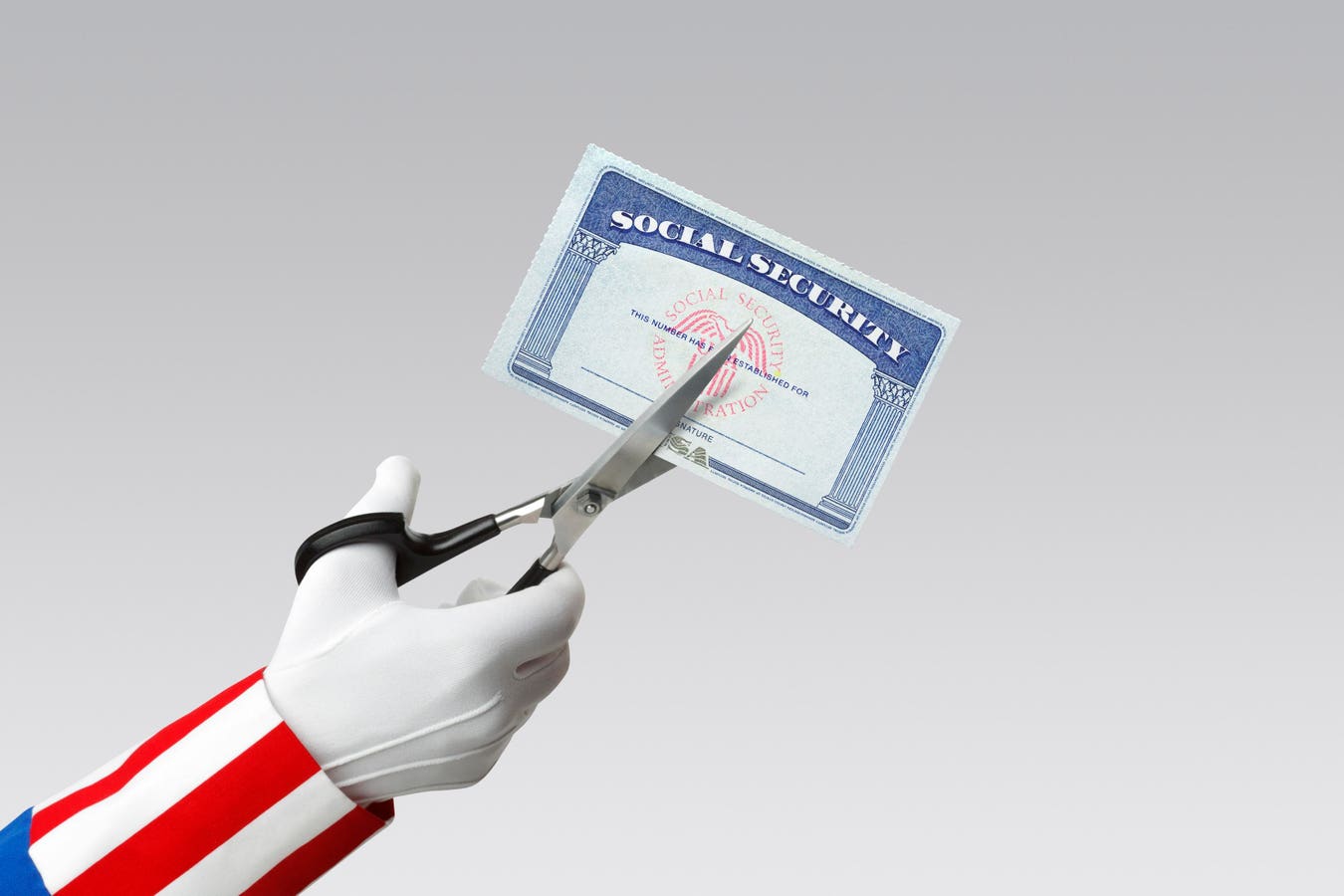
When the Bureau of Labor Statistics releases inflation numbers for July on Tuesday morning, August 12, the news is expected to be bad and will affect the Social Security COLA.
Economists say new tariffs will nudge inflation higher, and that jump will ripple straight into next year’s Social Security cost-of-living adjustment. Rising inflation could mean Social Security checks in 2026 will have lower buying power for over 66 million of Americans.
How the Social Security COLA is Computed
The Bureau of Labor Statistics (BLS) calculates official price indexes for urban consumers (CPI-U), which represents the spending habits of about 88 percent of the U.S. population, and an older one—wage earners and clerical workers (CPI-W)—which represents about 29 percent of the U.S. population. The numbers are very closely related and hardly ever diverge. The government currently adjusts Social Security benefits with the CPI-W because it was the only one available when the Social Security COLA was first introduced in 1972.
The government uses the CPI-W from the third quarter of the last year a COLA was determined to the third quarter of the current year – July–September. If there is no increase, there can be no COLA. If there is deflation, thankfully, Social Security does not reduce benefits.
Controversy About What Index Is Right For Social Security COLA
There has been a huge controversy about how the CPI is used and whether it is an appropriate index for seniors. The index used for the Social Security COLA, based on the CPI-W, may not be the typical basket of goods and services that Social Security recipients buy. It may not fully account for rising healthcare costs and shelter costs, which disproportionately affect older adults.
Here Comes the Experimental Measure CPI – Elderly For The Social Security COLA
Because of these complaints, the BLS considered the reasonable argument from advocates that the expenditure weights—the basket of goods—for urban (CPI-U) or CPI-W were not appropriate for the 62-years-and-over population.
Another index with no official use—the CPI-E (Experimental Price Index for the Elderly)—weights medical and housing spending more heavily was calculated to see if it were really different from the official index used for the Social Security COLA.
If the experimental index had more money budgeted for its construction, it would drill down on the different spending patterns of the elderly and adjust for the cost of retail goods the elderly would typically buy. For instance, an enhanced (and more expensive) experimental index would reflect the cost of buying one tube of toothpaste at the neighborhood CVS for $2.95 rather than ten tubes at Costco for $1 each. However, the index would have to consider that seniors can get discounts that cushion price increases. Clearly, the argument for a new official index just for Social Security was not compelling enough to justify the cost.
I can see why. The expectation was that the CPI-E would be much higher than the official indices so that the Social Security index should be based on it. And, in fact, from Dec. 1982 to Dec. 2011, the CPI-E did run higher (3.1% vs. 2.9%) because medical care –which the elderly spend more on — and shelter costs rose faster than overall inflation, and these categories carry more weight in the CPI-E.
However, from 2012 to Dec. 2024, the annual difference between CPI-E and CPI-U fluctuated between positive and negative values. Some years, like 2016, 2019, and especially 2021, saw CPI-E rise faster; other years, such as 2014, 2018, 2022, and 2023, saw the opposite. This inconsistent pattern shows seniors’ cost of living is not persistently higher than that faced by the broader urban population or urban wage and clerical workers.
Social Security COLA Lag—A Defect Particularly Bad For 2026
But there are other problems with the COLA and arguably more serious than the market basket used. With an annual adjustment, Social Security check increases will always lag price changes recipients actually experience. Here is how that works. The COLA increase is based on last year’s inflation, not ongoing inflation. So, if the inflation rate – basically, a person’s cost of living — increases faster than the previous year, the increase Social Security recipients get won’t be enough to cover the inflation they are facing at any one point in time.
And this lag -problem is worse when the last year’s inflation was lower than the current year. And since inflation in 2026 will likely be higher than 2025, Social Security recipients will lose buying power all year long and won’t get relief until January 1, 2027.
Bottom line: Lagging adjustments do not keep pace with actual inflation experienced by recipients, leading to a decrease in purchasing power over time.
Fixes For Properly Adjusting Social Security COLA
The real fix to Social Security benefits is to raise the Social Security benefit across the board—say a flat $200. It would be a progressive increase because it would mean more to low-income people than high-income people. It would also be easy to pass politically and fair since everyone gets it. The U.S. has the highest senior poverty rate in the G-12—22.8%, compared to France’s 5%. That’s not a statistic; it’s a moral failure . (Japan has the second highest senior poverty rate at 20%, Most nations’ rates are below that of Spain’s 13.3.)
I can’t forget about a woman I read about (found by reporter Nicole Neuman of Utah’s ABC News) who noted her income was low when she was working and really low now that she is retired.
It Is Starting To Taste More Like Tuna
“My amount is about $1,500 a month,” said Maria Garcia, 64 years old. “When I was working, I was making $2,800 a month. I’m sure there are thousands, if not millions, of seniors in this nation like me who can’t afford their medication and either get their medication and eat cat food, or skip their medication.” When asked particularly about the cat food she said, “Some say, ‘Well, it’s starting to taste more like tuna.’ Or, they add something to it to make it have a little more flavor,” she said. “They already have a cat at home, so they can buy a case. They have a can for each meal. Whether or not they have something to go with it isn’t important to them because they figure they’re getting the nutrition they need from the cat food.”
Policy Fixes for Social Security COLA
- Despite the problems, don’t change the Social Security COLA index. It is good enough. I agree with Alicia Munnell, economist and senior advisor at the Center for Retirement Research at Boston College, which she founded: don’t mess with the index—it is a good compromise.
- Keep inflation as stable as possible—changes in prices make it hard for people on fixed incomes to budget, and when the cost of living rises faster than income, recipients lose. Since many can’t work, there is no relief.
- Consider more frequent Social Security adjustments so recipients don’t have to wait a year to restore their buying power with an annual Social Security COLA.
Read the full article here