
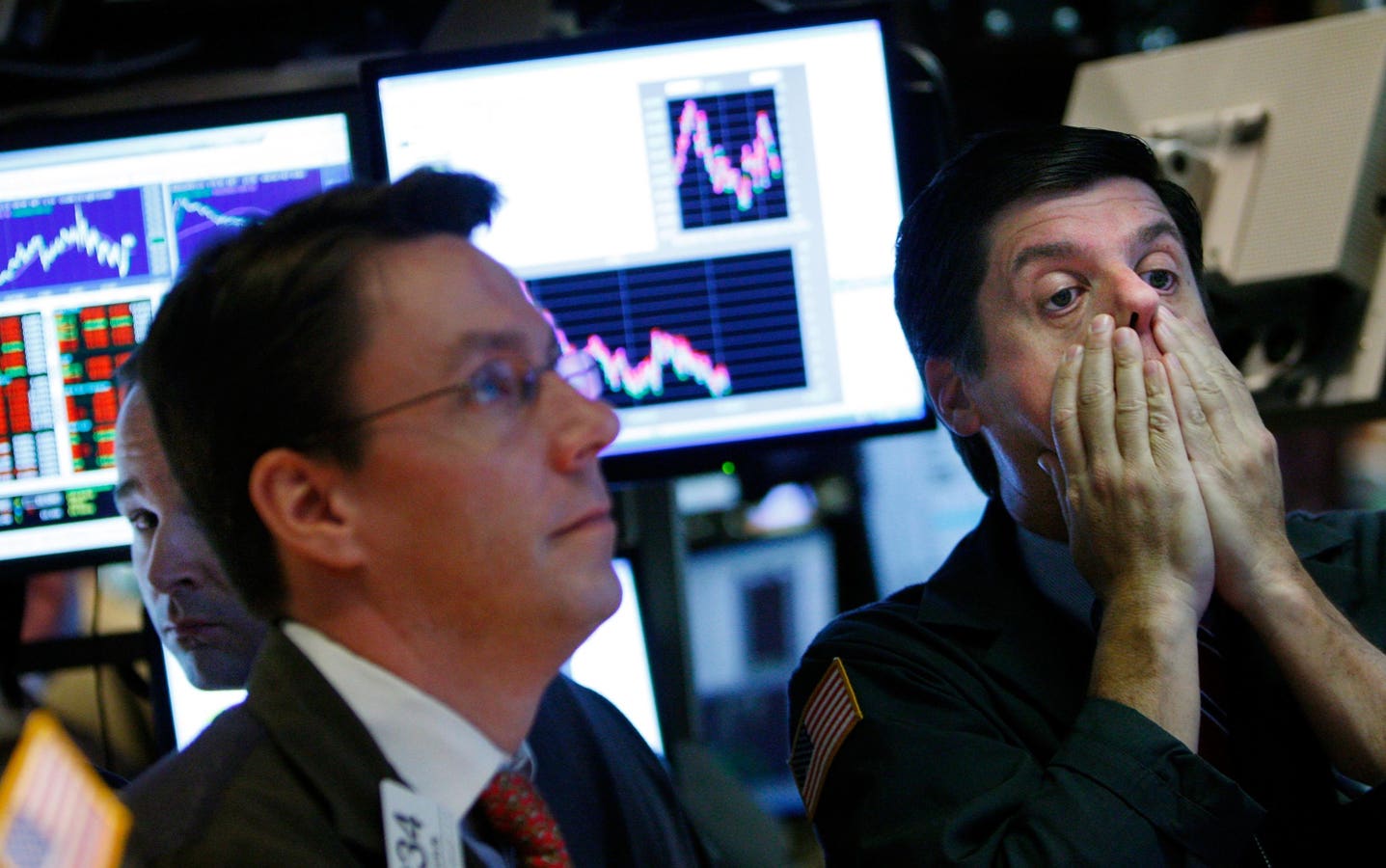
“Oh, sh–. OK.”
That was RH CEO Gary Friedman’s real-time reaction during an April 3, 2025, CNBC interview as he watched his company’s stock plunge live during a quarterly earnings call, moments after the White House announced a new round of tariffs. RH, also known as Restoration Hardware, is a luxury furniture retailer heavily dependent on a supply chain stretching from Asia to America. Friedman’s expletive was likely echoed in countless boardrooms throughout the day. Still, in the days to come, his expletive will be repeated in millions of family rooms across the country as the Dow experienced its biggest wipeout since 2020.
Whether buying furniture, planning retirement, or just filling your gas tank, uncertainty doesn’t just shake market numbers—it rattles confidence. Yes, it is about money, but ultimately it is about emotion. And that, perhaps more than stock prices or interest rates, shapes behavior. The field of psychology suggests that when feeling fear, people typically pursue one of three options: fight, flight, or freeze.
Many of us are watching our 401(k) potentially melt down to a 301(k). While you may be counting lost dollars, which generation you are a part of may also influence how the stock plunge will affect your perception of what is happening and, ultimately, your behavior.
A generation is not simply an age. Shared experiences and memories formed in late adolescence and early adulthood best characterize a generation. From wars to recessions to even the price of eggs or gas at the pump, each generation has its own memories of crises, politics, economic upturns and downturns, and storylines in its heads about how events unfolded and how they were resolved.
These generational experiences serve as a lens through which different cohorts will view, interpret, and respond to the tariff-induced economic shock. From Gen Z to the Silent Generation, the impact and reaction to this uncertainty will not be the same. However, the shared anxiety and, for many, fear about what comes next will be universal.
Gen Z: Shared Anxiety
For Gen Z—those just entering the workforce and taking their first financial steps—today’s market shock is not simply a headline; it’s a formative experience. Gen Z doesn’t just watch the news; they live it. With a thumb swipe, they are immersed in fear-laced tweets, memes, and TikToks, turning social media into an anxiety amplifier.
Economic uncertainty spreads across social platforms like an emotional wildfire. Even those not directly affected may feel the contagion of uncertainty, leading to delayed decisions—putting off purchases or embracing short-term thinking over long-term planning. The pandemic left young adults skeptical of traditional career paths and job security. Many Gen Z view a full-time job with a side hustle not as optional but essential—an economic Plan B in an unpredictable world.
If current uncertainty persists, this generation could mirror their great-grandparents—the WWII generation—who emerged from the Great Depression as frugal, resilient, and determined. Whether Gen Z becomes the next “great generation” will depend on their adaptability and how well we all support their transition into confident economic adulthood.
Millennials: Scarred by Serial Shocks
Millennials—now in their 30s and 40s—have weathered economic storm after storm: the Great Recession, a global pandemic, and inflation. These crises haven’t just shaped their finances—they’ve shaped their worldview. For many, financial systems, public institutions, employers, and traditional life stages have become as steadfast as sandcastles on a beach.
Much like Gen Z, Millennials are not only experiencing bad news—they are also sharing it, absorbing it, and interpreting it as personal financial warning signs. This generation may be more inclined to postpone significant life milestones—such as homeownership, starting a family, having children, or switching careers.
With employers increasingly perceived as unreliable, Millennials often maintain side hustles or gig work not just for extra income but as a hedge against instability. This mentality, while pragmatic, may also lead to early burnout as they enter midlife.
Gen X: Panini’d, Not Sandwiched
Gen X—midlife professionals with careers, mortgages, children, and aging parents—is often described as the sandwich generation. However, increasing economic instability will likely make them feel more like a grill-pressed panini than a simple sandwich. GenXers in their late 40s to 50s act as the financial “shock absorbers” of their families, responsible for everyone and everything.
Tariffs that increase the price of goods or introduce volatility into retirement accounts aren’t just inconvenient—they’re stress multipliers. They may trigger belt-tightening across household budgets, delay home renovations or college savings plans, and even lead to revised retirement dreams. Many Gen Xers have lived through economic storms before and will respond not with panic (at least not on the surface) but with quiet triage—adjusting budgets, absorbing shocks, and adapting to whatever the new economic normal may become.
But under the surface, this generation is carrying a heavy load. Research indicates that overall well-being hits a low trough in middle age. Economic uncertainty will only deepen that self-assessment of how life is going, which may be reflected not just in spending but also in workplace engagement and productivity.
Younger Boomers: Retirement, It Was So Close
For younger Boomers in their early 60s, inching toward or entering retirement, tariff-induced market dips feel uncomfortably familiar. Many still carry the memories and portfolio scars of the dot.com bust in the late 1990s, the Great Recession in 2008, and the rapid loss of wealth that came with both events.
Retirement, so close for many in this cohort, may suddenly feel too risky. Many may choose to extend their full-time work life just when hoping for a new chapter of full-time leisure. For younger Boomers, it’s not just about money—it’s about the loss of certainty just when there is less time to adjust and adapt.
Silent But Stressed
Older retirees—leading-edge Baby Boomers and the Silent Generation—may seem financially stable due to pensions and other benefits, but they are not immune to the emotional effects of economic turbulence. Many live on fixed incomes, and rising prices or portfolio declines can trigger difficult decisions.
Though they’ve weathered wars, recessions, and inflation before, that history doesn’t always bring comfort. It may bring a deeper awareness of risk. For this generation, confidence and control matter more than portfolio growth. Already, many are not spending as much as they could to enjoy their later years. They may now respond to economic shocks by spending even less out of fear of outliving their savings.
Heightened economic anxiety may also delay the Great Wealth Transfer. For instance, numerous older Boomers and Silent Generation families have been giving while living, e.g., helping children and grandchildren with home purchases, educational expenses, and even memory-making family vacations. Given the current volatility, the next generation may have to wait.
Market Volatility: Emotion Puts Money In Motion
Uncertainty creates anxiety in every generation. Tariffs may be the trigger, but the resulting emotion creates a wave of uncertainty and fear of what comes next. This anxiety expresses itself differently—on social media, in delayed spending, in second-guessing retirement plans, and in postponed wealth transfers.
As RH’s CEO put it bluntly, all it takes is a glance at the screen to change the mood. The real challenge isn’t just navigating the numbers—it’s managing the profoundly human response to uncertainty, one generation at a time.
Read the full article here