



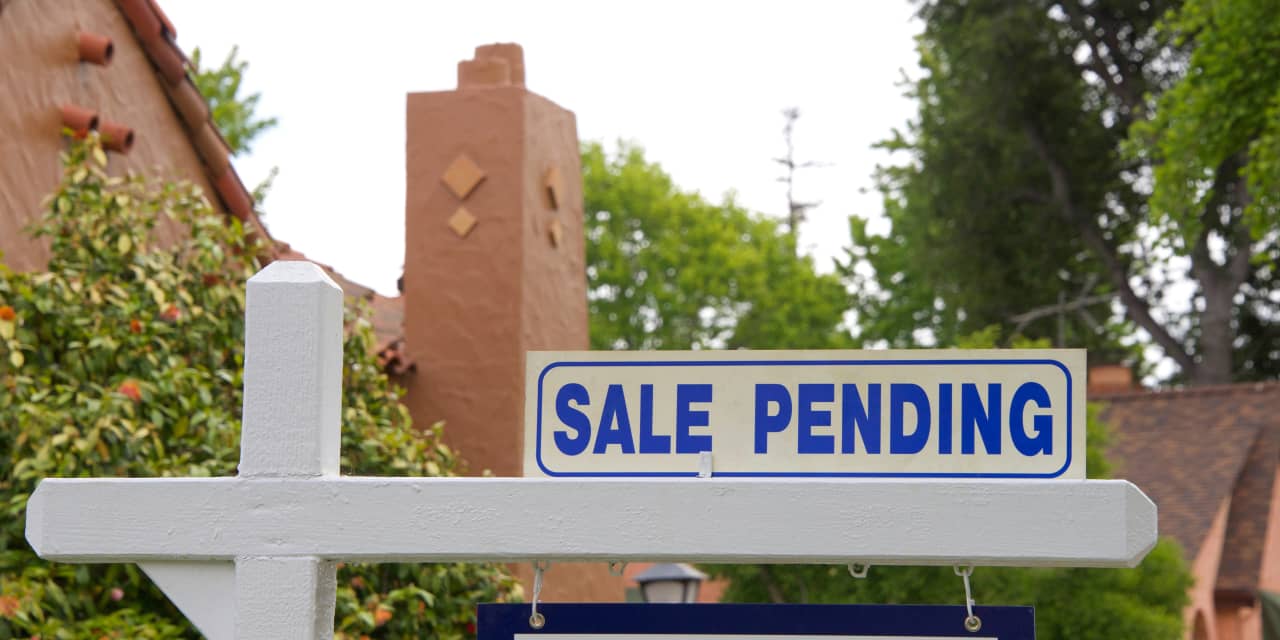
Mortgage rates are at their highest level in 23 years. Many U.S. homeowners who have locked-in their costs, however, have reason to be thankful: the median mortgage holder’s rate is still below 4%.
Rising housing costs have gotten a lot of attention, for good reason: Home affordability in the third quarter sank to the lowest level since 2007 as home prices and mortgage rates rose, according to property analytics company Attom Data.
The difficult conditions for buying a home have boxed some buyers out of the market and kept sellers from moving, driving existing-home sales in September to their lowest level since 2010.
For those homeowners in no rush to unload their property, news of rising mortgage rates have little consequence—except, perhaps, to push off the thought of selling even further. The median U.S. first-lien mortgage holder in September had a 3.5% rate, according to loan-level data from ICE Mortgage Technology, a mortgage analytics and technology division of the Intercontinental Exchange. The last time weekly rates measured by
Freddie Mac
were that low was in the beginning of 2022.
Such a stat, coupled with recent interest rate quotes, illustrates home loan interest rates’ wild ride since 2020. Mortgage rates fell to historic lows in the pandemic’s early years, before climbing recently to the highest level in more than two decades. Mortgage rates are 1.3 percentage point higher than where they began the year, Freddie Mac data show.
The difference between the rates the typical borrower pays and recent rate quotes underscores the current financial incentive for homeowners to remain in place. All else equal, a homeowner with a 30-year fixed-rate mortgage at 3.5% would pay roughly $860 less a month on a $400,000 home than someone who purchased a home last week with a 7.79% mortgage rate, the most recent weekly average from Freddie Mac.
That plays an important role in the unusual dynamic in the housing market today. While prospective buyers are stretched thin by higher rates, sellers have fewer incentives to list, a consequence of rapidly-rising rates known as the mortgage rate lock-in effect. That’s helped keep the number of previously-owned homes for sale low. There were 1.13 million homes for sale at the end of September, less than half of the prepandemic average of about 2.5 million, according to historic National Association of Realtors data.
The lack of supply, coupled with reduced demand, resulted in the rate of home sales in September falling to its slowest pace since October 2010, according to seasonally-adjusted Realtors association data.
It also helps explain how home prices have gained even as mortgage rates have climbed: Homes tracked by
Redfin
in the four week period ended Oct. 8 were sold for a median $370,000, 2.7% higher than the same time last year.
Home prices will be in the news again this coming week, when the S&P CoreLogic Case-Shiller Indices for August are released on Tuesday. Economists expect that the S&P index measuring home prices in 20 of the nation’s large cities will gain 0.9% from July’s levels, and will be 1.6% higher than one year prior.
U.S. homeowners may largely meet higher mortgage rates with a shrug—but rising rates pose more peril in other countries because of the way popular home loan products are structured. Adjustable-rate mortgages and loans with shorter terms are more common in countries such as Germany and the United Kingdom, Barron’s previously reported. Buyers in the U.S., meanwhile, largely buy with longer term fixed-rate loans.
The average U.S. homeowner may have little financial motivation to sell—but the decision to move is seldom purely financial. Fewer than 10% of first-lien borrowers have mortgage rates above 6%, according to Ice Mortgage Technology. But in a survey conducted in the first two weeks of September by
Zillow,
19% of surveyed homeowners said their home was listed for sale or they intended to sell in the next three years.
Lower mortgage rates would unlock some housing supply—though homeowners largely prefer to stay put, suggest results from Zillow’s upcoming Quarterly Survey of Homeowner Intentions and Preferences shared with Barron’s. Of those without plans to sell, the majority—roughly seven in 10—said they probably wouldn’t move, even if mortgage rates fell. Zillow will publish the full report in early November.
While financial motivations, such as selling one’s home for a profit or expecting a better deal on buying a new house now than in the future, were popular reasons cited by prospective sellers, the most commonly-cited catalyst for listing a home was related to preferences, not profit. More than three in five homeowners considering selling said they wanted to purchase a more upgraded house, or one with more desirable features.
That’s not to say the financial math doesn’t play a role: Homeowners were about two times more likely to consider selling if they had a loan that required private mortgage insurance, a necessity for most loans with down payments below 20%.
Write to Shaina Mishkin at [email protected]
Read the full article here