


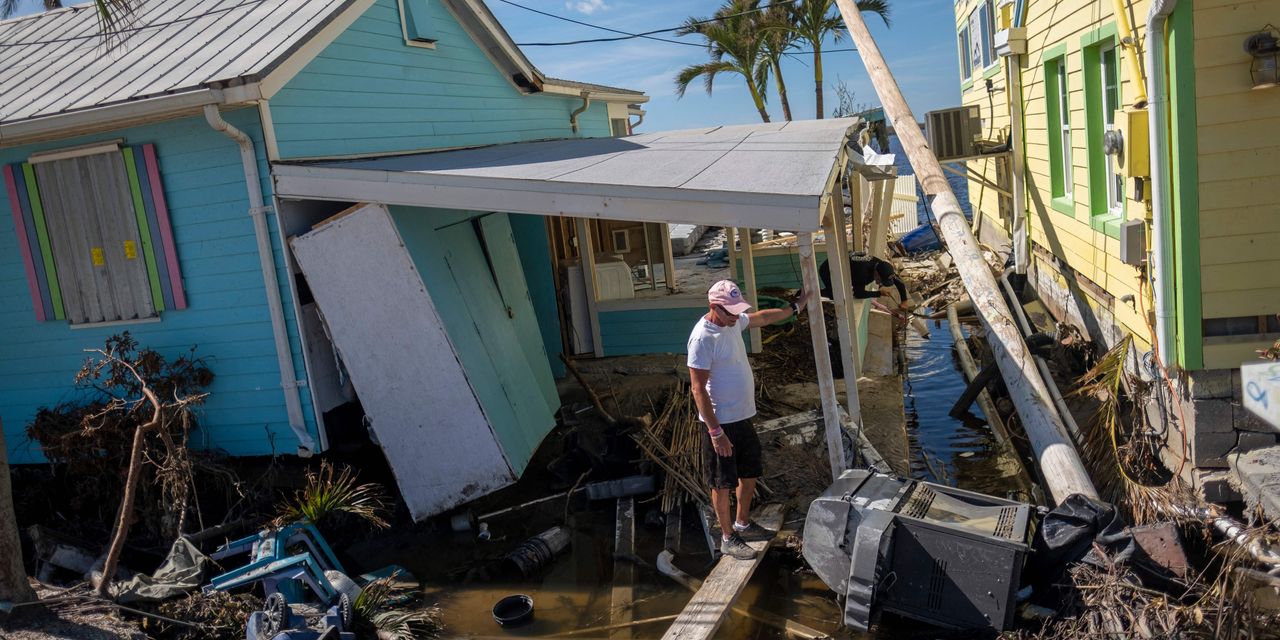
Torrential rain, catastrophic floods, high winds, resilient wildfires — some states are facing the growing dangers of a rapidly changing, mercurial climate that is making life costly for many homeowners in high-risk states.
“New buyers are often not aware of how high insurance premiums can be,” says Joseph Ortiz, a homeowner and licensed realtor based in Orlando who sells properties in Florida. “Life can be very unpredictable here, there is always this ‘what if’ scenario in your head when a hurricane strikes.”
Across the U.S., home insurance prices spiked by over 21% on average between May 2022 and May 2023, and over 35% in Florida, Policygenius estimates. First Street Foundation’s most recent finding also reveals that about 39 million homes have underpriced premiums in the country, and could face catastrophic increases as climate related risks, inflation, insurers’ reinsurance costs and rebuilding expenses mount.
“Insurance companies draw up prices by using a catastrophe model,” says Matthew Eby, founder and CEO of the insurance tracking nonprofit First Street Foundation. “It is not that they want to raise premiums to unrealistic levels, but it is not viable for them to operate at discounted prices in areas where climate related events are a constant threat.”
In California, many carriers are feeling the financial pain brought on by wildfires. The state regulates its premiums, so companies cannot increase their prices by more than 7%, unless they bring it to a vote, which has prompted many to stop underwriting policies in risky zip codes or pull out of the state. With about 9% of California’s market share in 2022, State Farm was the number one home insurance provider in the state, bringing in $7.8 billion in premiums, but incurring losses of almost $6 billion, local government data shows.
“The cost of residential construction is up 34% nationwide,” says Pat Howard, a licensed property and insurance expert at Policygenius. “If you take into account the relatively low premiums, the real cost of rebuilding, then you see why big companies are leaving some of these high-risk states, basically forcing homeowners to rely on unaccredited smaller insurers, or the insurer of last resort, aka the state.”
In Louisiana, insurance companies paid out $23 billion in insured losses for over 800,000 claims for 2020 and 2021 leading to many insurers departing the state. Now Louisiana’s insurer of last resort is the state-backed Citizens Property Insurance program, which hiked prices by 63% in 2023 for the most at-risk zip codes.
The catch is, says Eby, that many of the high-risk area homeowners, who are in hurricane-prone states like Louisiana or Florida, must not only have their regular homeowner’s policy to protect against wind damages, but also buy a separate flood insurance coverage. Flood insurance in 90% of the country is provided by FEMA’s National Flood Insurance Program (NFIP).
“They have designated special flood hazard areas,” says Eby. “And if your home falls within that perimeter, which is called a 1% annual chance or greater, then you have to buy flood insurance.”
The NFIP has lost over $36 billion since its inception, and issued a new risk rating map to mitigate future losses.
In Louisiana, flood insurance premiums are set to increase by more than 230% this year, affecting about 150,000 homes. Florida is facing similar increases for flood coverage for over 1.2 million homes, as Hurricane Ian caused over $60 billion in insured losses and $100 billion in total damages in 2022.
“In Florida your roof has to have five more years in it,” says Ortiz. “Otherwise no insurance company will take you. And even if something happens, it takes a long time to get insurance companies to pay up, since there is lots of fraud.”
Despite the climate-related risks, potential buyers are flocking to the Sunshine State.
“Those who bought a few years ago have about $100,000 in equity,” says Ortiz. “People know about the hurricanes, but so far this has not changed home sales. Inflation and interest rates are, however, bad for business.”
It is time that we address the elephant in the room, says Howard.
“People have this perfect idea about how they want to retire, and how they want to spend spring break. They ignore the warning signs of an unfolding climate crisis. We need to acknowledge that climate change is real, and owning in high risk areas will become difficult and costly over time.”
Watch the video to find out more.
Read the full article here