


Yannique Ivey may be going back to the office, but she’s open about the fact that you won’t catch her first thing in the morning. Wait too long in the day and you’ll miss her, too.
Ivey, 27, works for a tech consulting firm in Atlanta and says she drives into the office once or twice a month, and when she’s there, she commits to an 11a.m. to 3 p.m. schedule — just in time for a catered lunch, to catch up with colleagues for a few hours, and head out before traffic stalls her in a “hellish” commute home, she tells CNBC Make It.
She and her team are open about this arrangement. Spending a few shortened days each month in office “takes needed time away from the actual work” to socialize and build community at work, she says, but “I’m a lot more productive when I’m home, so I get started there and wind down from work there.”
It’s a new arrangement picking up across the U.S.: Workers are showing up for required attendance, but that doesn’t mean they’re sticking around for the full day.
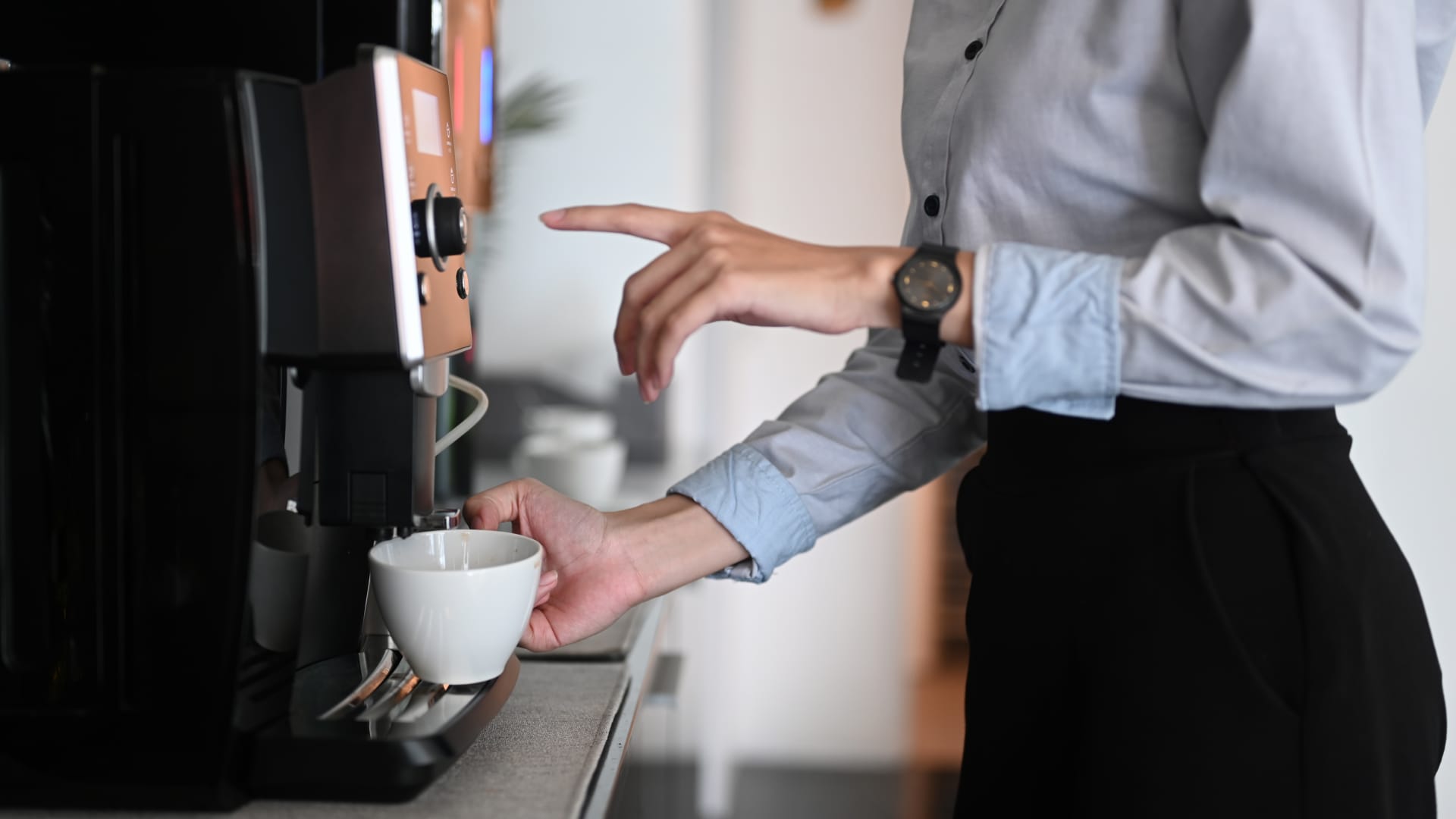
More than half, 58%, of hybrid workers admit to “coffee badging,” or the act of going into the office building for their morning coffee, earning an imaginary badge for it, and then going home to work for the remainder of the day.
That’s according to a June survey of 2,000 people from Owl Labs, a company that makes videoconferencing devices.
Another 8% of hybrid workers say they haven’t tried coffee badging just yet but are interested in doing so.
The next frontier of hybrid is working when you want
Despite the half-days (or less), the coffee badging trend doesn’t mean people are sneaking out and slacking off for the rest of the afternoon, says Frank Weishaupt, CEO of Owl Labs.
As he sees it, the practice could mean people are seeing the value of their office and enjoy being there some of the time. Survey respondents say they value in-office time to meet with their colleagues, spend time with work friends and take meetings.
On the other hand, Weishaupt says, there may be another subset of people who use coffee badging as a way to “show their face in an old traditional way that we used to work” without having to be there for the full day.
The standard has been set around flexibility in terms of where you work, and now the standard is starting to become flexibility in when you work.
Frank Weishaupt
CEO of Owl Labs
Some office attendance guidelines only dictate a number of days bosses want people in, but not always the hours people should be present. So, “coffee badging gives you the opportunity to maintain your flexible schedule, which is incredibly important to employees,” Weishaupt says.
Weishaupt himself does the reverse of coffee badging, where he’ll start his day from home, drive in mid-day to avoid morning traffic, and finish the rest of his day from the office.
“The standard has been set around flexibility in terms of where you work, and now the standard is starting to become flexibility in when you work,” he adds. The traditional 8-hour workday from the office “just doesn’t seem all that relevant.”
In the Philadelphia area, Kynisha Gary, 30, says coffee badging helps her find balance as a parent and Penn State student. She reports to her nonprofit’s office on Tuesdays, Wednesdays and Thursdays and sometimes leaves around lunch to pick up her son from school and then finish the day from home.
It’s a major productivity boost, Gary says: “I get all my work done — nothing goes missing on the days I go home and finish work from there.”
She enjoys having control over her hybrid schedule even more than when she worked for a company that was fully remote, she adds. “I looked forward to getting back to into the office and being interactive,” she says. “Being exclusively at home was double the work and harder to get away from work.”
Yannique Ivey generally goes into the office at 11 a.m. and leaves by 3 p.m. to avoid long commute times in the morning and evening.
Courtesy of subject
For Ivey, she says the flexibility “definitely helps us feel that we are more in control of our work-life balance and lifestyle in general, not feeling the demand and pressure to have to integrate back into the office all the time.” She says the arrangement feels natural in her work environment, where her company wants to “ensure we’re happy outside of the work we’re doing.”
Taking office attendance is ‘a trust killer’
As far as who’s showing up just to leave early, men are more likely to coffee badge (62%) than women (38%), and age-wise, millennials are the most likely generation to do so, followed by Gen Xers, then Gen Zers, and finally baby boomers.
“There are still trust issues between employers and employees as it relates to productivity,” Weishaupt says, and “the reality is we’re in this state where employees want flexibility, they’ve proven they can do it, [and] they don’t need to be hired to be watched doing the job.”
Ultimately, Weishaupt says, “the office still has a place. I don’t think anybody would question that.”
Meanwhile, some companies like Meta, Google, Amazon and JPMorgan Chase say they’re cracking down on office attendance through badge swipes and other methods, The Wall Street Journal reports. Other businesses track not just when their employees come into the office, but how long they stay by tracking things like when they badge into another floor or use their phone to print documents.
Office attendance monitoring is “a trust killer,” Weishaupt says. “If I feel like I have to be sitting at my desk at 4:30 on Friday, even though I’m not doing anything productive, [because] my boss might call me — there’s a trust issue there”
“This isn’t grade school,” he adds. “We’re not hiring people to watch them work. We’re hiring them to do a job. And it’s the culture of accountability and leadership setting the right tone to be able to measure productivity that makes all the difference here.”
Want to be smarter and more successful with your money, work & life? Sign up for our new newsletter!
Want to earn more and land your dream job? Join the free CNBC Make It: Your Money virtual event on Oct. 17 at 1 p.m. ET to learn how to level up your interview and negotiating skills, build your ideal career, boost your income and grow your wealth. Register for free today.
Check out: Offices remain half full after latest round of RTO mandates: Taking away hybrid could be a ‘betrayal’
Read the full article here