



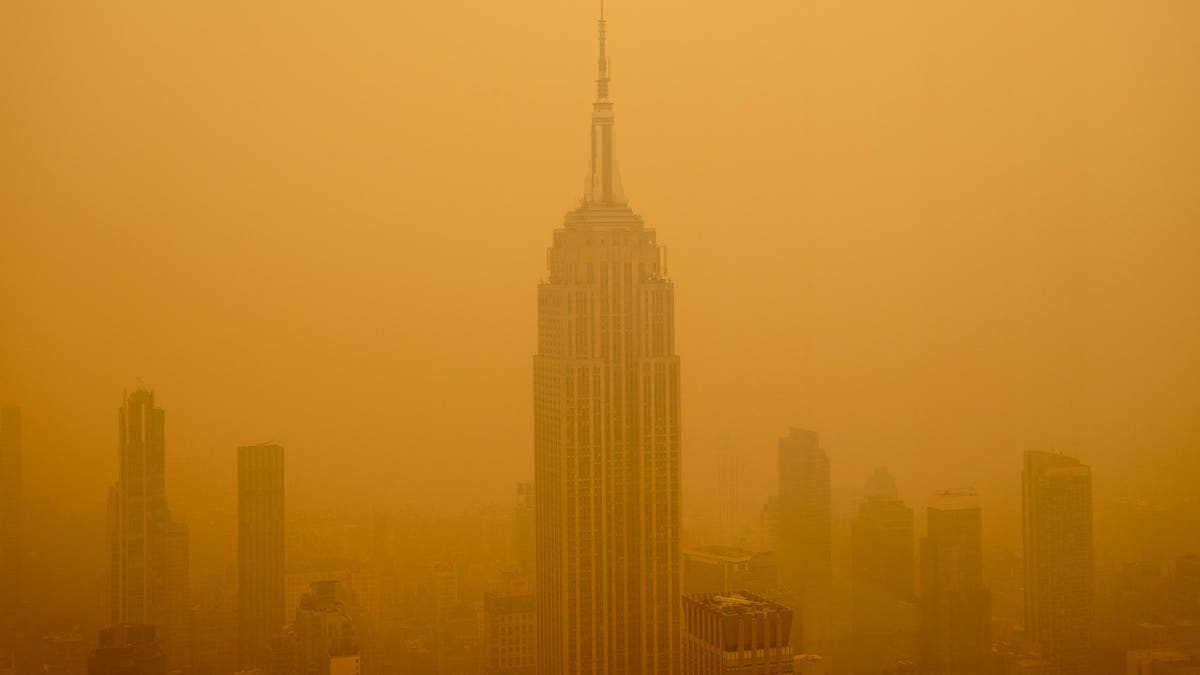
“We’ve been building more and more in harm’s way” – Sean Kevelighan, CEO of the Insurance Information Institute.
Here is an edited excerpt from this week’s CxO newsletter. To get this to your inbox, sign up here.
While wildfires in Canada are no longer burning our eyes and throats here in New York, they’re causing smoke to settle over parts of Minnesota as the world gears up for another year of record temperatures – exacerbated by developing El Nino conditions.
As climate change wreaks havoc on property, growth and human health, it’s becoming harder to insure against such risks. Average insured natural catastrophe losses have risen nearly 700 percent since the 1980s, according to Sean Kevelighan of the Insurance Information Institute. Nine of the top 10 record loss years for the industry have happened since the 2000s.
While climate change is a clear culprit, let’s also point a finger at those who are developing or moving into areas that are prone to risks like wildfires. “We’ve been building more and more in harm’s way,” says Kevelighan. “When you increase the risk, it also increases the price of that risk transfer tool.”
That contributes to rising rates or situations where insurers decide to exit a state altogether. (Insurance is regulated and priced at the state level.) State Farm, which insured more than 20% of all homes in California last year, said last month that it would no longer sell new insurance policies for homeowners or business property owners in the state. It was soon followed by Allstate, which has also decided to stop writing new policies in California, citing increased climate risk and building costs—along with reinsurance to protect its own bottom line.
Protecting Against Probable Futures
One of the most prescient and data-driven thinkers in quantifying the cost of climate change is Spencer Glendon, who began studying climate risk while running investment research at Wellington Management and founded Probable Futures to democratize the tools to understand and address it. (His Equinox and Solstice letters are a must-read.) Glendon argues that climate stability “underpins all of civilization.”
What reinforces that stability is insurance: pooling capital to protect individuals from the risk of low-probability, high-consequence events. Just as health insurers need healthy clients to subsidize the costs of the sick, property/casualty insurers need robust models that keep premiums affordable and the company profitable.
Thus begins a tug of war between regulators who want insurance to be widely available at affordable prices and insurers who to price premiums to reflect the real risk—and maximize profit. That’s hard to do in California, Kevelighan says, because of proposition 103, a 1988 law that effectively caps rates and limits insurers’ ability to model for risk.
Fighting Climate Coverage in Court
In Florida, meanwhile, insurers worry about mounting climate risks and a legal system that has let people sell their insurance claims to a third-party attorney or contractor who then fights those claims in court. That’s how a state that accounts for 9% of property claims can also account for 79% of lawsuits related to property claims.
While Gov. Ron DeSantis recently signed a bill to reduce those lawsuits and fees, many Floridians find themselves unable to afford expensive insurance against floods, hurricanes and natural disasters. And so, in a state where homeowners already pay more than three times the national average to insure their homes, Floridians face the prospect of higher prices or potentially no coverage at all.
Click above to get Kevelighan’s comments. And below is a video interview with Columbia University climate economist Gernot Wagner on the real cost of wildfires.
Read the full article here