



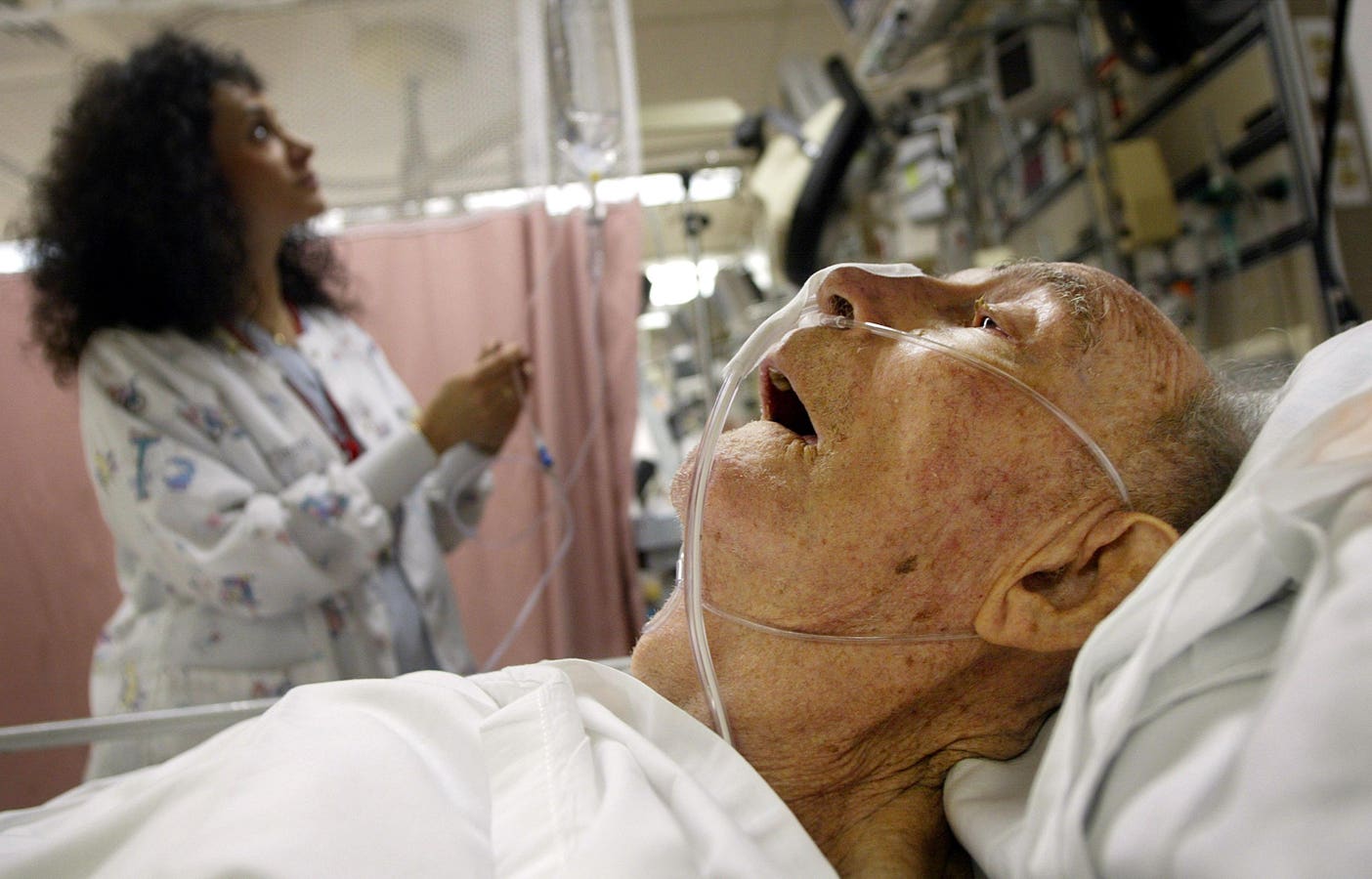
I recently visited a friend who is in his 80s and was hospitalized after a fall. He did not know where he was, was convinced lawyers had come to visit him in the night (a truly horrifying thought), and was extremely agitated. While it still is not clear what happened, he may have been experiencing delirium, which happens to as many as one-third of older adults during a hospital stay.
Patients and their families need to be aware of this condition, and hospitals need to do more to prevent it.
A Common Problem
Delirium occurs frequently in intensive care units and often after surgery. But even patients in medicine units, such as my friend, can be victims. It is not dementia, but often older patients with this confusion are written off as if it is, which is to say not treated at all.
As many as three in ten older patients may acquire delirium in the hospital. And the consequences can be severe, including longer hospital stays, more readmissions, frequent discharges to institutional care instead of home, increased likelihood of true dementia, and even death. The financial cost: As much as $182 billion annually in the US.
There are as many as 40 different screening tests for hospital-acquired delirium, but relatively little research on which are best. More troubling, while screening is common in ICUs, where it may be done daily, it is less frequently used for visitors to emergency departments or for patients in medicine units.
Multiple Causes
Some good news: Two recent articles in the journal JAMA Internal Medicine highlight positive results from a pair of simple delirium screening tests in Oxfordshire, England. While they leave open some unanswered questions, they highlight an easy first step towards addressing delirium—identifying it.
Delirium is complicated because it seems to have multiple causes, some associated with hospital stays but also linked to pre-existing conditions. They may include dehydration and malnutrition, which are dangerously common among older adults.
They may also be linked to the hospital environment itself, such as being in bed for long periods of time, disrupted sleep cycles, and use of multiple medications. In ICUs, constant alarms, being on a ventilator, being improperly sedated, and even the absence of natural light can lead to delirium.
Often, these issues can feed off one another. For example, delirium may affect patients’ ability to follow instructions or their anxiety may make them want to get out of bed when they should not. Bed alarms may add to their confusion, or staff may sedate them, which can worsen their delirium.
Increases in ED boarding times, where older patients may spend hours or even days on gurneys in hallways while they wait for an available room, may make the delirium problem even worse.
However, delirium may be preventable in up to 40 percent of cases. And hospitals can address it. But they first must identify it.
The English Experience
That’s where the English experience may help. Since 2015, the National Health System in Oxfordshire has built delirium screening into the electronic health record for every patient over age 70 who visits an ED. After administering the simple 10-question test, a doctor determines whether the patient has delirium, does not, or if results are uncertain.
Physicians at Oxford University, who developed the tests, studied the records of nearly 19,000 patients. In their JAMA article (paywall), they reported the screening was completed three-quarters of the time and that certain or possible delirium was found in about one-third of cases, which seems consistent with other research.
Importantly, facilities that did not routinely use this screen found lower rates of delirium, which may imply they were missing cases.
The research also found that patients with either certain or possible delirium were more likely to stay in the hospital longer, be discharged to institutional care, or die than those without the diagnosis.
A related JAMA Internal Medicine commentary by Edward Marcantonio of the Harvard Medical School and Donna Fick of the Penn State School of Nursing concluded the screening method is sound. And they urged that any tests “should be quick, accurate, equitable, acceptable to clinicians, integrated into routine workflow, and include robust and ongoing training and implementation of best practices for all older adults with delirium.”
Families Should Be Alert
Before treatment is needed, there may be ways to limit hospital-acquired delirium.
For example, in the journal BMC Critical Care, Katarzyna Kotfis of the Pomeranian Medical University in Szczecin, Poland and co-authors described a radical new vision that they think could entirely eliminate delirium caused by ICU stays. Their model envisions a fundamental redesign of the units as well as limits on the use of sedatives.
That may be ambitious, and Marcantonio has made more modest suggestions for addressing the environmental causes of dementia in hospital patients. They include carefully managing medications, getting patients out of bed, and making sure patient rooms are quiet and dark at night. They also urge hospitals to better communicate with family members about the diagnosis.
In 2024, the American Psychiatric Association urged the government to designate delirium as a “major complication,” which would make it easier for clinicians to get paid for treating it, a not-insignificant step in encouraging identification and treatment.
Hospital-acquired delirium is common among older patients and has serious consequences. Patients’ families need to be aware of it, and willing to say something if they see a change in cognition of their loved one. And hospitals need to do more to address it.
Read the full article here