



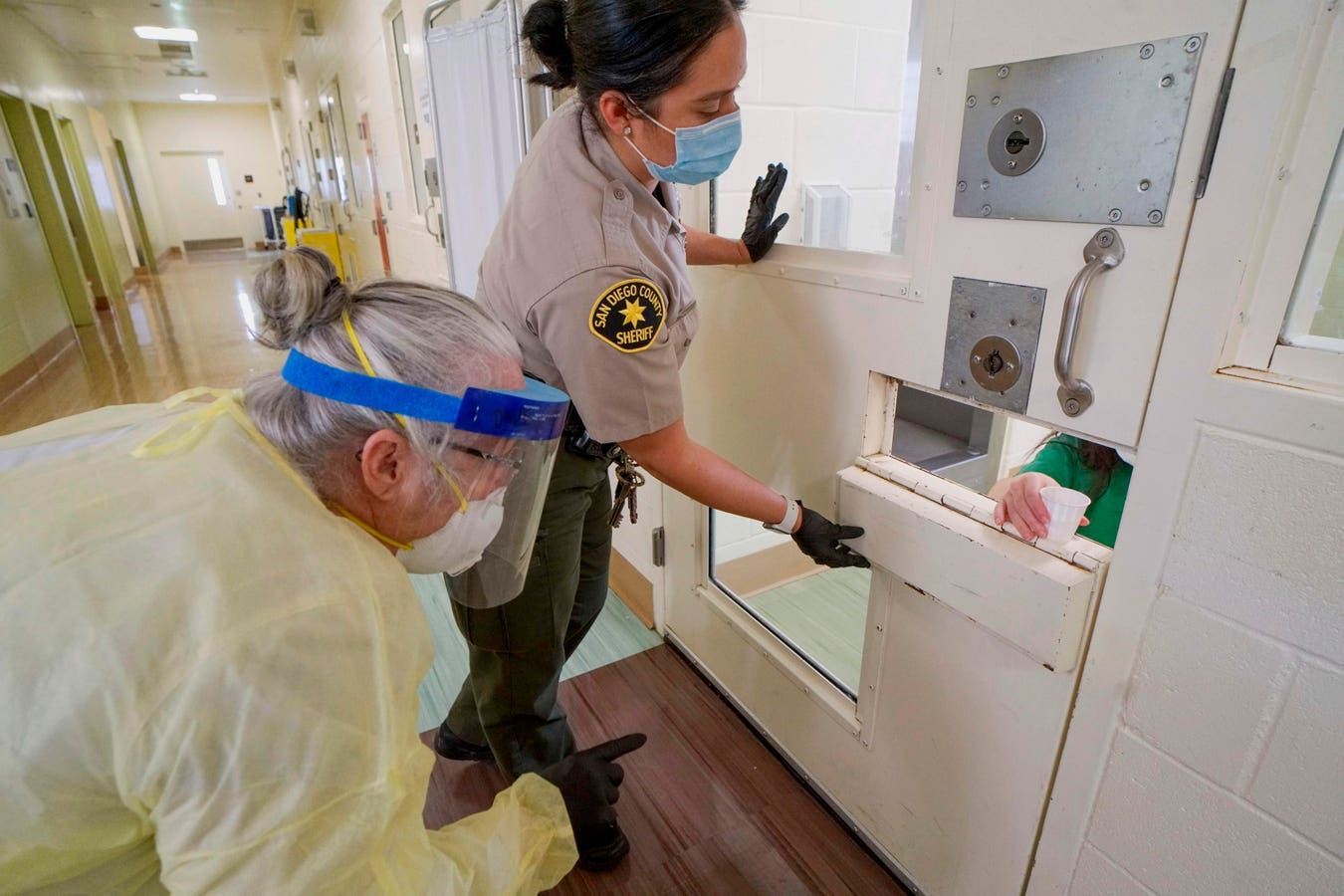
With COVID-19 in our rearview mirror, the time has come to reflect on lessons learned from the contagion that filled our hospitals with sick patients and killed millions worldwide. Nowhere was the pandemic more urgent than in U.S. prisons where both workers and prisoners struggled to control the contagion within secure, prison compounds.
Some of the remedies to prevent contagion created other problems. One effective, but crude, method was the mass isolation and lockdown of prisoners for months on end during the pandemic. Locking people in cells or isolated cells became the easiest method to control the spread. Prisoners saw their in-person visitation cancelled for over a year, there were also limitations on calls and emails to loved ones and even curtailed mail delivery. Isolation, typically used as a means of punishment for prisoners who disobeyed rules, became the de facto means to stopping the spread of COVID-19 as prisoners were locked in cells for as much 24 hours each day. Showers were limited as was any recreation. For some prisoners, it was like two years of isolation.
A study released this year by Health Affairs entitled “COVID-19 Restrictions In Jails And Prisons: Perspectives From Carceral Leaders,” provides a comprehensive study from faculty members at Johns Hopkins University (Saloner, Kramer, Song, Doan, Eber, Rubenstein, and Sufrin). The study concluded that “Decision makers generally approached quarantine and isolation protocols as a logistical challenge, rather than an ethical one. Although they recognized the hardships imposed on incarcerated people, they generally saw the measures as justified. Comprehensive outbreak control guidelines for pandemic diseases in carceral facilities are urgently needed to ensure that future responses are more equitable and effective.” As one can tell from this conclusion, prisons’ reactions gave little consideration to the ethical aspects of controlling the spread of COVID-19.
The authors noted that some of those they interviewed, mostly those who worked at the prisons, that while there was a move to de-populate prisons, such measures were often at odds with those in law enforcement who complained of putting “criminals” back on the street to often. In the federal Bureau of Prisons (BOP), their move to reduce populations was granted under the CARES Act, which allowed it to move mostly minimum-security prisoners from prison camps to home confinement. That move too was mostly opposed by federal prosecutors despite the assurances of safety for the community. The result of CARES Act home confinement resulted in over 50,000 prisoners serving out their sentences on home confinement, most all without incident. The CARES Act home confinement program for federal prisoners ended in April 2023.
Those running prisons generally approached quarantine protocols as logistical and public health challenges, rather than an ethical one. Although most decision makers reflected on the situation as both personally and emotionally exhausting, they more readily defined their challenge in terms of “logistical issues to be managed than as an ethical conflict between competing values or principles of how to treat their residents.” As a result, mental health issues presented themselves.
The authors of the paper concluded that, “A consistent theme we heard was that carceral facilities were fundamentally unprepared for a public health challenge as complex and massive as COVID-19.” This was especially true at the BOP which only cancelled visitation at its prisons on March 13, 2020, months after the first cases of COVID-19 hit the United States and the day the federal government declared a pandemic. BOP facilities, particularly its 7 medical centers, were some of the hardest hit during COVID-19 and delays in vaccination along with inconsistent protocols led to the spread of the disease.
Prisons are in a difficult position. Their primary mission is protecting society from those who are incarcerated while providing a safe environment in the prison. The Johns Hopkins authors noted that “the inevitability of health harms during infectious outbreaks in which residents will be either exposed to the mental strains of prolonged isolation or at increased risk for contracting the disease highlights the sharp ethical dilemmas that occur in jails and prisons around infection control.” In the end, isolation was the preferred method of controlling contagion and the impact of this decision will be felt for years.
The paper concluded with three areas of concern; 1) Outbreak plans for future pandemics on the scale of COVID-19 need to be developed for carceral facilities, 2) practical ethical guidelines need to be created to address emergency preparedness in carceral facilities, and 3) given the harms already sustained during COVID-19, a process needs to be laid out for addressing the trauma of the pandemic and building trust with residents. Where appropriate, this may include acknowledgments by leaders of mistakes or errors made during the pandemic response. It is difficult to see any prison or jail system openly admitting its failures no matter the gain in preparation for another health crisis.
Another investigation by STAT (reports on health and medicine) looked at the BOP’s missteps during the pandemic and concluded that a slow rollout of vaccinations and limited testing was a contributor to the spread of COVID-19 in federal prisons. Every BOP facility experience a COVID-19 outbreak with deaths and illness among both staff and prisoners. According to the Department of Justice Bureau of Justice Statistics, almost 2,500 state and federal prisoners died of COVID-19-related causes during the 12 months of March 2020 to March 2021.
Another misstep by the BOP was the fits and starts it had in moving prisoners around the country. At times, they isolated prisoners for months on end, keeping them in county jails and major holdover hubs for those prisoners in transit to their final designated facility. Many prisoners spent months in isolated cells, far from home and no sense of settling into any sort of prison routine. Instead, they were warehoused for months on end with little human contact. In other cases, hundreds of sickened inmates showed up at facilities with no place to isolate them. It took months to shut down and then to start back up the responsible movement of federal prisoners across the country.
Read the full article here