


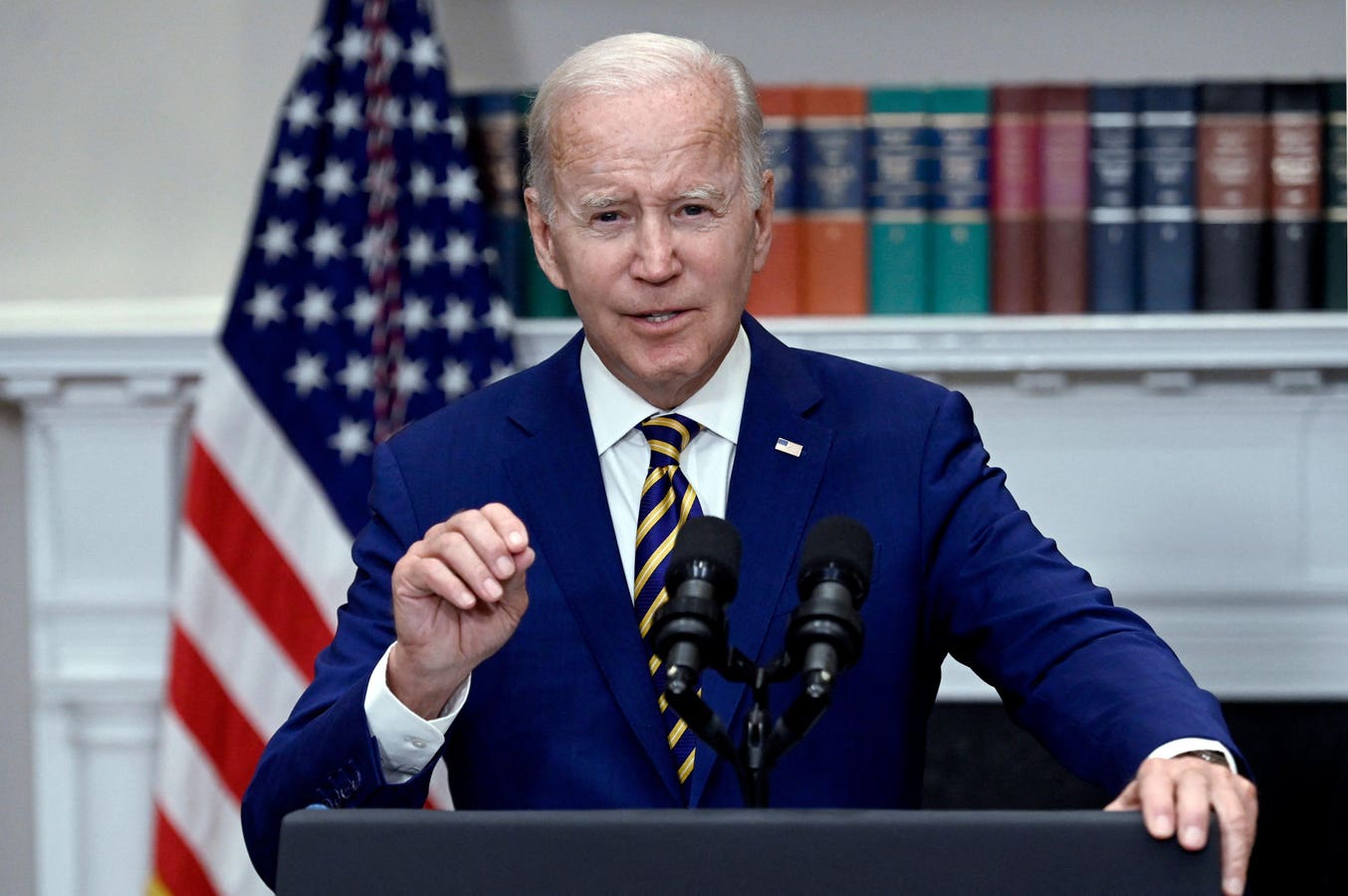
When the Biden administration launched its new SAVE income-driven repayment plan this year, the news seemed really promising for almost everyone repaying federal student loans. This new plan aimed to cut the average student loan payment for undergraduate loans in half, with a considerably higher number of Americans qualifying for $0 monthly payments based on their income and family size. And the current statistics show over half of borrowers who have enrolled in SAVE are paying $0 monthly.
What’s more, the SAVE plan would help borrowers who don’t qualify for $0 monthly payments save at least $1,000 per year compared to other income-driven plans.
Several other benefits were also thrown in, including the fact those who pay less than the interest charges on their loans would have that interest covered by taxpayers. This means that student loan balances would no longer balloon when borrowers with big balances paid less than the accrued interest each month.
And of course, borrowers with the SAVE plan would have their remaining balances forgiven after being on the program for 20 to 25 years. People less than $12,000 in eligible federal student loans could even see their loan balances forgiven in as little as 10 years on the program.
Moral Hazards Of Biden’s SAVE Plan
While the fine print on the SAVE repayment plan certainly sounds nice, there are several moral hazards and disincentives built in. For example, some borrowers may not see the point of trying to increase their income if their student loan payment is just going to go up.
Plus, there’s no reason to pay down student loans faster when remaining balances you owe are going to be forgiven in 20 to 25 years, right? In fact, there’s a whole financial game that borrowers can play to minimize the loan payments in order to maximize loan forgiveness – especially for those with large loan balances.
Unfortunately, the SAVE repayment plan brings an even worse issue to the forefront, and it’s one that most of the current administration’s student loan “fixes” always fail to address.
Letting borrowers pay a small percentage of their discretionary income (in this case, 5% of income toward undergraduate loans and 10% for graduate school loans) regardless of how much they borrow does nothing to ease the escalating costs of higher education. In fact, plans like SAVE could even embolden institutions to charge higher tuition since they know that their “customers” don’t actually have to pay more after graduation.
The fact is, the SAVE plan makes it so borrowers can overpay for a degree with no direct financial consequences. In fact, someone who borrows $30,000 for a liberal arts education could have the same monthly payment as someone who borrowed $80,000 for the same degree as long as their income and family size was the same. The same would also be true for someone who worked part-time during college to keep costs down and only borrowed $20,000 for their degree, so why bother working?
While federal student loan limits for undergraduate loans set a cap on how much students can borrow and how much of a moral hazard is in play here, the same cannot be said for some federal student loans for graduate students. In fact, graduate school students can take out Direct PLUS loans and borrow up to “the cost of attendance minus other financial aid received,” according to StudentAid.gov.
Monthly payments for graduate school loans are based on 10% of discretionary income with the SAVE plan (instead of 5% with undergraduate school loans), yet the monthly payment is still based on income and family size. This means graduate school borrowers could sign on the dotted line for virtually any amount of Direct PLUS loans and still make the same monthly payment regardless of their loan balances.
If you’re a college “selling” graduate degrees, there is no incentive to control costs.
Borrowers Should Still Keep Costs Down
All this being said, there is one reason for college students to try to keep expenses down — even if they plan to pay as little as possible toward their loans with the SAVE plan until their remaining balances are wiped away. While forgiven student loan balances are currently exempt from being treated as taxable income through December 31, 2025 thanks to the American Rescue Plan Act of 2021, nobody knows how forgiven student loan balances will be treated in years after that.
Also note that the American Rescue Plan Act of 2021 only exempts forgiven balances for the purposes of calculating federal income taxes, and that states can (and often do) levy state income taxes on forgiven debts. This means that, after 2025 and beyond, college students who have their debts forgiven under the SAVE income-driven repayment plan could face a student loan tax bomb in the year their debts are wiped away.
Obviously, this is a problem to consider for all people using the SAVE income-driven repayment plan regardless of how much they borrow. But since having a larger balance leads to more debt being forgiven and a higher tax bill, this theoretically creates an incentive to borrow less if you can help it.
The Bottom Line
The SAVE income-driven repayment plan is just like any other federal program in the fact it’s going to have its share of both winners and losers.
The winners are existing student loan borrowers who can qualify for $0 monthly payments or low monthly payments for the foreseeable future due to having a low income, and the losers are every future college student that will have to deal with the consequences of zero accountability of schools to control costs.
At the end of the day though, the new SAVE repayment plan stands to help a lot more people than it hurts. The U.S. Department of Education estimates that a higher percentage of people will qualify for $0 monthly payments compared to other income-driven plans, and most others stand to benefit from average savings of $1,000.
And since unpaid interest won’t accrue on loans repaid with the SAVE plan when borrowers have low or $0 monthly payments, any future taxation of forgiven amounts stands to still save borrowers money overall.
Read the full article here